Featured Image Prompt
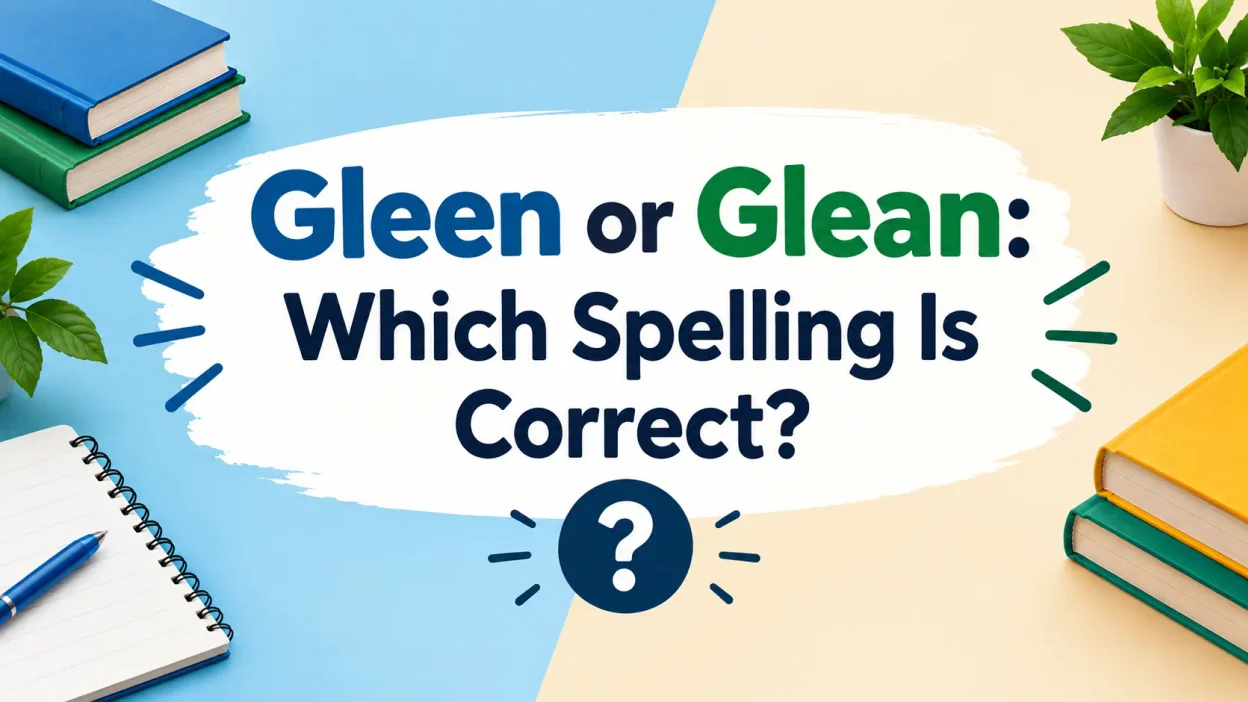
Create a clean 800×450 educational spelling graphic showing “GLEAN ✓” and “GLEEN ✗” in large centered typography, with a person gathering information from books and notes in the background, modern American English learning style, professional design, balanced composition, sharp readable text, no empty areas.
Image Alt Text
Educational graphic comparing the correct spelling glean with the incorrect spelling gleen.
Gleen or Glean: Which Is Correct?
If you are trying to choose between gleen or glean, the correct spelling is glean.
Glean is a standard English verb that means to gather information, facts, ideas, or resources gradually from different sources. Historically, it also referred to collecting leftover grain from fields after harvesting. Today, the figurative meaning is especially common.
Gleen is not a standard English word in this context and is generally considered a misspelling of glean.
Quick Answer
Glean is the correct spelling. It means to collect information, knowledge, or facts bit by bit from various sources. For example, “I gleaned useful information from the report.” The spelling gleen is incorrect when you mean this word.
Gleen or Glean: Which Spelling Is Correct?
The correct spelling is:
Glean ✓
The incorrect spelling is:
Gleen ✗
| Spelling | Correct? | Meaning |
|---|---|---|
| glean | ✓ Yes | To gather information or collect leftover grain |
| gleen | ✗ No | Misspelling of glean |
Examples
Correct:
- I was able to glean several useful facts from the article.
- Researchers gleaned information from historical records.
- She gleaned insights from customer feedback.
Incorrect:
- I was able to gleen several useful facts from the article.
- Researchers gleened information from historical records.
What Does Glean Mean?
The most common modern meaning of glean is to gather information, knowledge, or understanding gradually from different sources.
Rather than receiving information directly, you often glean it by observing, reading, listening, or analyzing clues.
Examples:
- I gleaned a few details from the meeting notes.
- Reporters gleaned information from public records.
- Students can glean valuable insights from the book.
- We gleaned that the project was behind schedule.
In these examples, the information is gathered piece by piece rather than being clearly stated.
Historical Meaning of Glean
Originally, glean referred to gathering leftover grain after a field had been harvested.
For example:
- Farm workers gleaned wheat from the field.
- Families gleaned leftover crops after harvest season.
Although this meaning still exists, it is less common in everyday American English than the figurative meaning involving information and knowledge.
How Do You Pronounce Glean?
In American English, glean is pronounced:
GLEEN
IPA:
/ɡliːn/
This pronunciation is one reason people sometimes mistakenly write gleen.
Although it sounds like “gleen,” the correct spelling is glean.
Example
Glean → sounds like green or clean
But it is spelled:
G-L-E-A-N
Not:
G-L-E-E-N
Why Do People Misspell Glean as Gleen?
The main reason is pronunciation.
The word glean contains the vowel combination ea, but it produces the long ee sound.
Similar examples include:
- mean
- clean
- lean
- bean
Because glean sounds like gleen, some writers mistakenly replace ea with ee.
However, standard English spelling uses:
glean ✓
Not:
gleen ✗
Is Glean a Verb?
Yes. Glean is primarily a verb.
Common forms include:
| Form | Example |
|---|---|
| glean | I glean information from reports. |
| gleans | She gleans useful insights. |
| gleaned | We gleaned several facts. |
| gleaning | They are gleaning data from surveys. |
Examples:
- The journalist gleaned facts from interviews.
- Researchers are gleaning information from the study.
- She gleans inspiration from nature.
How Is Glean Used in Modern English?
Today, glean is especially common in:
Academic Writing
- Researchers gleaned evidence from archived documents.
- Students can glean important lessons from history.
Business
- Managers glean insights from customer surveys.
- The company gleaned valuable feedback from users.
Journalism
- Reporters gleaned information from court records.
- The article helps readers glean key facts quickly.
Everyday Conversation
- I gleaned a few details from our discussion.
- You can glean a lot from watching experienced people work.
Common Expressions With Glean
Glean Information
- We gleaned information from multiple sources.
Glean Insights
- The team gleaned insights from customer reviews.
Glean Facts
- Journalists glean facts from interviews and records.
Glean From
- She gleaned valuable lessons from her experience.
- I gleaned that he was unhappy with the decision.
These combinations are common in both spoken and written English.
Glean vs. Learn
Although related, these words are not identical.
Learn
Learn means to gain knowledge directly through study, teaching, or experience.
- I learned French in school.
- She learned how to drive.
Glean
Glean emphasizes gathering information gradually or indirectly.
- I gleaned details from the conversation.
- We gleaned clues from the evidence.
You can learn something directly, but you usually glean it from bits of information.
Glean vs. Gather
Gather is broader.
- Gather information
- Gather evidence
- Gather supplies
Glean specifically suggests collecting information little by little.
Compare:
Gather:
“We gathered all the reports.”
Glean:
“We gleaned useful insights from the reports.”
The second sentence focuses on extracting knowledge from the material.
Common Mistakes With Glean
Mistake 1: Writing Gleen
Incorrect:
“I gleened useful information from the article.”
Correct:
“I gleaned useful information from the article.”
Remember that the word uses ea, not ee.
Mistake 2: Confusing Glean With Learn
Less Natural:
“I gleaned algebra in school.”
Better:
“I learned algebra in school.”
Glean is usually used for gathering information indirectly.
Mistake 3: Misspelling Related Forms
Correct forms include:
- glean
- gleans
- gleaned
- gleaning
Incorrect forms include:
- gleen
- gleens
- gleened
- gleening
Examples of Glean in Sentences
- I gleaned several useful facts from the report.
- Researchers gleaned information from historical documents.
- She gleaned valuable insights from customer feedback.
- Students can glean important lessons from history.
- The journalist gleaned details from court records.
- We gleaned that the project would be delayed.
- The team gleaned ideas from industry experts.
- Readers can glean useful information from the guide.
- He gleaned clues from the conversation.
- They are gleaning data from multiple sources.
A Simple Trick to Remember the Spelling
Think of these words:
- lean
- clean
- bean
They all use ea.
Glean follows the same pattern:
GLEAN ✓
Not:
GLEEN ✗
A simple memory phrase is:
“Glean uses EA to gather ideas.”
Frequently Asked Questions
Is it gleen or glean?
Glean is the correct spelling. Gleen is a misspelling when you mean gathering information or collecting leftover grain.
What does glean mean?
Glean means to gather information, knowledge, facts, or insights gradually from different sources. It can also refer to collecting leftover grain after harvesting.
How do you pronounce glean?
Glean is pronounced GLEEN and has the IPA pronunciation /ɡliːn/.
Is glean a verb?
Yes. Glean is primarily a verb.
Examples:
- I glean information from reports.
- She gleaned useful insights from the meeting.
Why do people write gleen instead of glean?
Because glean sounds like “gleen.” The pronunciation uses a long ee sound even though the word is spelled with ea.
What is the past tense of glean?
The past tense is gleaned.
Example:
“We gleaned several useful facts from the study.”
Can glean mean gather information?
Yes. In modern English, that is the most common meaning of glean.
Conclusion
When choosing between gleen or glean, the correct spelling is glean.
Glean means to gather information, facts, knowledge, or insights gradually from different sources. It can also refer to collecting leftover grain after a harvest.